Pirate Tales, Part 2
Piracy, of course, has been with us as long as people have gone to sea. Homer wrote about it in The Odyssey, Alexander the Great tried and failed to eradicate it, and Mediterranean pirates once took a young Julius Caesar prisoner. Over the centuries, buccaneers have preyed on shipping from the seas off China to the waters of the South Atlantic, and from the Barbary Coast to the Spanish Main.
But the period from about 1690 to 1720 is known as piracy’s golden age — the time of Henry Morgan, Captain Kidd and Edward Teach (better known as Blackbeard), who famously pillaged ships in the Caribbean. (Neither Kidd nor Teach lasted very long as true pirates. Blackbeard was gunned down off the coast of North Carolina in 1718, while Kidd was sentenced to death at the Old Bailey in 1701, with a proviso that his body hang by the Thames for two years as a warning to those thinking of imitating him.)
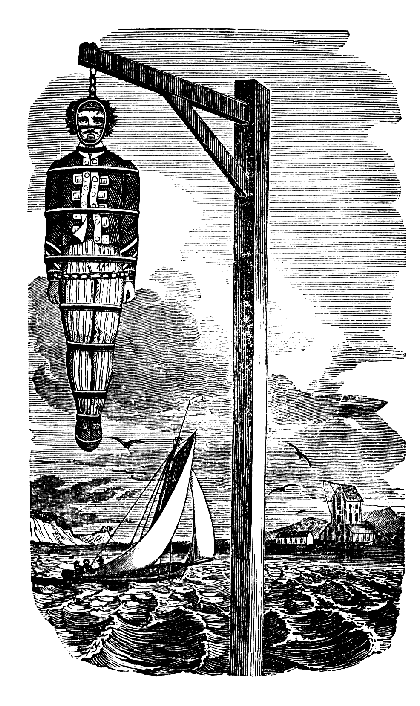 Captain Kidd’s body hanging by the River Thames
Many of the original pirates of the Caribbean began as privateers, the quasi-legal buccaneers engaged by England, Spain and other nations to disrupt each other’s trading lanes. The only catch was they had to hand over a portion of their booty to their sponsors; some eventually opted to go independent and keep it all for themselves.
By the mid-18th century, piracy was well in decline because of the combined efforts of international navies, and in 1856 the signing of the Declaration of Paris, effectively banned the practice everywhere. Throughout most of the past century, the biggest risk to shipping stemmed from armed attacks during times of war, such as the U-boat menace during both world wars. Few would have expected the new millennium to usher in a modern era of piracy, one that has the potential to eclipse its predecessor.
And yet, as global trade has increased since the end of the Cold War, so too has piracy. Maritime outlaws know that it’s impossible to police every cove, strait, harbour or sea — and that the rewards outweigh the risks. Now, more than 46,000 merchant ships ply the ocean, carrying more than 90 per cent of world trade, and each one can be a plum target for opportunistic maritime criminals.
The director of the International Maritime Bureau in the U.K., Captain Pottengal Mukundan, divides these modern pirates into two categories: “At the lower end of the scale, you have muggings at sea, where criminals try to get on board a ship and steal whatever they can within a period of about 40 minutes to an hour, and then take off. At the other end of the scale, you have the organized-crime attack, which is really aimed at hijacking a multimillion-dollar ship and its multimillion-dollar cargo. That’s a very well-resourced attack.”
And these better-organized attacks are growing more common, he says, with pirates who brandish automatic weapons and grenade launchers overpowering crews whom they then kill or set adrift. Once in control, they can change a ship’s name and ownership by using fax machines and satellite phones. “Then they take the vessel to a new port under a false name and sell the cargo,” Mr. Mukundan explains. “Once the cargo is discharged, they have control of the empty vessel, which they use as a criminal vessel, a pirate vessel — what we call a phantom ship.”
Thanks to Hollywood, piracy is still largely associated with the Caribbean, when in fact its happiest hunting grounds today are in Asia and Africa, especially the waters off Indonesia, Bangladesh, Somalia, Nigeria and the Red Sea region.
For years, the most dangerous stretch of sea has been the narrow Straits of Malacca between Malaysia and the Indonesian island of Sumatra. The 805-kilometre strait is a vital shipping lane; more than 50,000 vessels pass through it every year. At its narrowest, the channel is less than three kilometres wide, forcing ships to reduce their speed as they sail past the many places where pirates lurk, primarily on the Indonesian side.
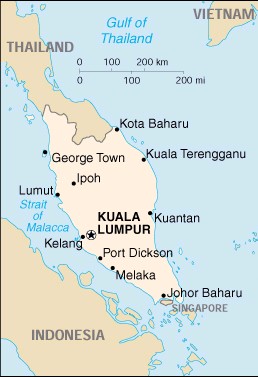
In early January, 2004, a small oil tanker called Cherry 201 was making a routine run to Belawan in northern Sumatra. It carried a crew of 13 and a thousand tonnes of palm oil as it motored toward Indonesia’s second-busiest harbour and the gateway to war-torn Aceh province, the site of so much carnage when the tsunami hit almost a year later.
Although the crew was aware of the pirate risk, as well as the fighting between the army and the Aceh rebels, they had made the run before without incident. But on Monday, Jan. 5, their luck ran out when a speedboat darted from the shoreline and took up position alongside the tanker. Grappling hooks were thrown and men with automatic weapons climbed aboard, making for the wheelhouse.
The Cherry was defenceless — merchant vessels rarely carry weapons — and the pirates quickly overwhelmed the crew and ordered the captain to go ashore, contact the vessel’s owners and demand a ransom of 400 million Indonesian rupiah (about $50,000). The tanker itself simply disappeared, perhaps hidden in one of the many inlets that riddle the area.
For weeks, the negotiating went on, possibly as the Cherry’s owners tried to buy time so Indonesian forces could find their vessel and her crew. The owners first talked the pirates down to 100 million rupiah and then finally settled on 70 million (less than $9,000). But after five weeks without being paid, the pirates’ frustrations boiled over: They grabbed four of the crew, executed them and dumped the bodies in the sea before fleeing. They have yet to be caught.
Abduction is especially troubling to people like Mr. Mukundan, who points out that the number of seafarers taken in the first three months of this year was double that in the same period last year.
“The taking of hostages is not opportunistic, it is a very well-planned attack,” he says. “Organized crime syndicates are actively involved, and they’ve always been, because it’s a hugely profitable exercise for them.”
To be concluded...
posted by Daniel Sekulich @ 10:19 PM
6 comments


6 Comments:
2015-10-7 xiaozhengm
louis vuitton outlet stores
true religion jeans
tory burch sale
ray ban sunglasses
coach outlet store online
michael kors outlet
jordans for sale
Coach Factory Online Outlet Cheap Purses
michael kors handbags
ugg boots
coach outlet
canada goose jackets
michael kors handbags
Outlet Michael Kors Online
louis vuitton handbags
Louis Vuitton Outlet Quality Handbags
Michael Kors Outlet Sale Online Store
air max 95
Abercrombie and Fitch Striped Shirts
ugg boots sale
coach factory outlet
Authentic Louis Vuitton Handbags Outlet
Michael Kors Online Store Outlet
louis vuitton
Louis Vuitton Neverfull GM Monogram
michael kors uk
Ray Ban Outlet Store Online
Authentic Louis Vuitton Handbags Cheap Sale
Michael Kors Outlet Discount Purses Online
michael kors outlet
Michael Kors Handbags Factory Outlet
hollister
Coach Coupons In Coach Outlet Store Online
Discount Clearance Coach Outlet Handbags
michael kors outlet
20151031dongdong
gucci outlet
sac longchamp pas cher
gucci belt
nike outlet
louis vuitton outlet
michael kors outlet
cheap ugg boots
prada outlet
timberland boots
jordan 13
michael kors
hollisters
michael kors outlet
coach outlet
michael kors outlet
cheap uggs
michael kors
ugg boots
nike store
michael kors outlet
michael kors bags
jordan 4 toro
true religion outlet
hollister uk
michael kors handbags
michael kors outlet
nike air max
fitflops
gucci borse
adidas originals
michael kors outlet online
michael kors handbags
toms outlet
nike store uk
nike blazer
pandora charms
michael kors handbags
fitflops clearance
kate spade outlet
cheap oakley sunglasses
coach handbags outlet
true religion jeans sale
mlb jerseys
cheap jordan shoes
michael kors uk
michael kors outlet
coach outlet store
louis vuitton outlet store
lacoste pas cher
michael kors handbags wholesale
coach outlet online
michael kors outlet
true religion outlet
cheap ugg boots
michael kors handbags
rolex watches,rolex watches,swiss watches,watches for men,watches for women,omega watches,replica watches,rolex watches for sale,rolex replica,rolex watch,cartier watches,rolex submariner,fake rolex,rolex replica watches,replica rolex
oakley sunglasses
cheap ray ban sunglasses
longchamp handbags outlet
giuseppe zanotti outlet
1128minko
https://decor-ksa.com/laser-railings/
https://decor-ksa.com/iron-railings/
https://decor-ksa.com/stainless-steel-handrail/
https://decor-ksa.com/stainless-steel-handrail/
https://3kary.com/property-status/land-for-rent/
https://3kary.com/property-status/land-for-sale/
https://3kary.com/property-status/commercial-land/
https://3kary.com/property-type/lands/
Lane Kiffin cheap nfl jerseys was apparently putting in some work for Nike Roshe Run FAU even before anyone really knew he was Nike Free Run a candidate for the job.
While there’s been nothing official yet from the school, all signs and reports nfl jerseys store are pointing to the Alabama offensive coordinator being named as the head Nike Air Max 90 coach at christian louboutin uk Florida Atlantic at some point in the not-too-distant future — specifically, at an expected press conference as early as Tuesday morning. Last week, even before reports christian louboutin shoes connecting louboutin outlet Kiffin to FAU first surfaced, NFL Jerseys Kiffin was reportedly looking to add a quarterback wholesale nfl jerseys with whom he’s Nike Air Max 2015 Shoes very familiar.
Post a Comment
<< Home